
375A Concord Road, Concord West NSW 2138


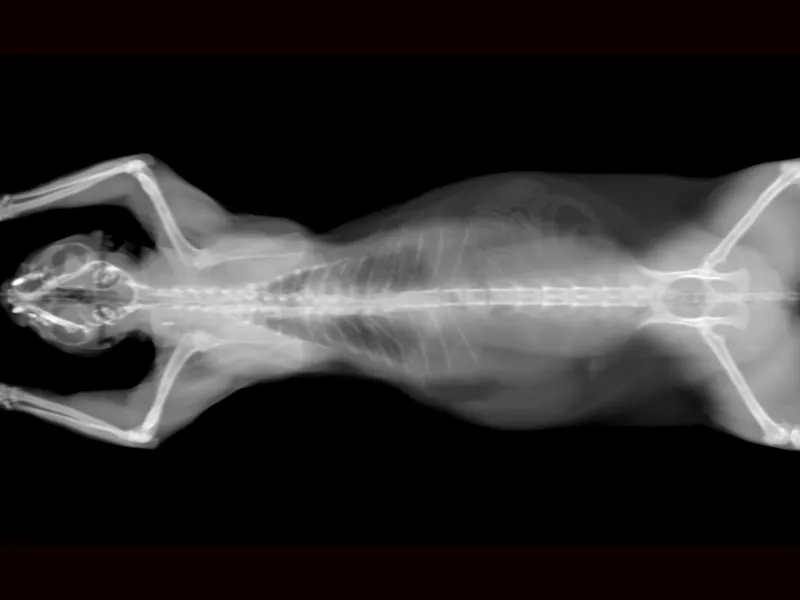
What is a CT Scan for Pets?
A CT scan (Computed Tomography) differs from a PET-CT scan. A CT scan shows structure and tells us what something looks like, while a PET-CT scan shows us what something looks like and how it is working.
A CT scan is an advanced imaging technique that uses X-rays and computer processing to create highly detailed, cross-sectional images of the animal’s body. Unlike standard X-rays, which show flat 2D images, a CT scan produces 3D images that reveal bones, organs, and soft tissues with a high degree of clarity.
In veterinary medicine, CT is valuable for detecting tumours, assessing bone and joint conditions, diagnosing nasal or chest disease, planning surgeries, and monitoring treatment outcomes. It gives veterinarians the structural detail they need to make accurate diagnoses and guide effective treatment planning.
“A CT scan shows structure — it tells us what something looks like..”
VIVIEN MUNOZ-FERRADA Dip Med Rad. Dip Med Phys — Medical Physicist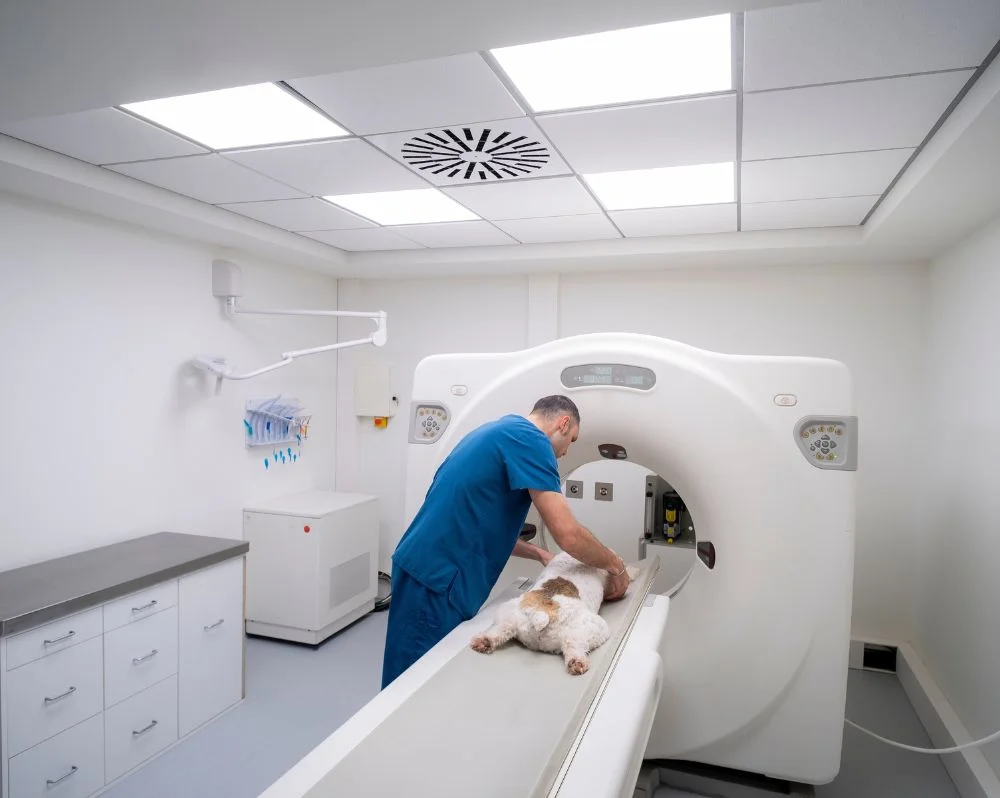
How does it work?
A CT scan is a fast and non-invasive way of creating a 3D anatomical map of the pet’s body. The process follows a simple series of steps:
- Preparation—Pets are usually fasted for several hours before the scan to ensure safety under sedation or anaesthesia. The pet is then carefully placed on the scanner bed and aligned for whole-body or regional imaging.
- Scanning – The bed moves slowly through the scanner’s circular ring. Multiple X-ray beams rotate around the body, capturing thousands of cross-sectional “slices.”
- Image reconstruction – Computer software compiles the slices into a detailed 3D image of the pet’s internal structures.
- Analysis & interpretation – A veterinary radiologist reviews the scan, providing a detailed report for your veterinarian.
- Post-scan – Most pets go home the same day after safely recovering from anaesthesia.
Is it uncomfortable for the pet?
A CT scan is considered safe and widely used in veterinary medicine. Most pets recover quickly and return to normal within hours of the procedure. CT scans do not cause any pain; the only sensation is from the brief IV injection used to administer anaesthesia. For more information, contact our team or speak to your primary vet about whether a CT or PET-CT scan is a suitable option for your pet.

For Vets
Your Partner in Patient Outcomes
We exist to support veterinarians, enabling them to tailor treatment for optimal outcomes. With PET Theranostics, you gain a trusted partner in patient outcomes.
For Vets
For Pet Owners
Care, Compassion and Clarity
Our PET-CT scans give the clearest picture of your pet’s condition, helping your vet determine the best path forward.
For Pet OwnersFrequently Asked Questions
What is a CT Scan for Pets?
A CT scan (Computed Tomography) is an advanced imaging technique that provides highly detailed, three-dimensional images of a pet’s body. While a PET-CT scan shows both structure and function, a CT scan focuses solely on structure — showing what something looks like rather than how it works.
CT imaging uses X-rays and computer processing to generate cross-sectional images that reveal bones, organs, and soft tissues in exceptional detail. This level of clarity allows veterinarians to identify issues that standard X-rays might miss, supporting precise diagnosis and treatment planning.
How is CT used in veterinary medicine?
CT scans play a vital role in diagnosing and managing a wide range of conditions in pets, including:
- Tumour detection and monitoring.
- Bone and joint assessment, especially for fractures or developmental issues.
- Nasal and chest disease diagnosis, where standard X-rays may not provide enough detail.
- Surgical planning gives vets an accurate 3D map of the area of concern.
- Treatment follow-up, allowing comparison of pre- and post-treatment scans.
By providing crystal-clear structural images, CT helps veterinarians make accurate, confident clinical decisions and tailor care to each pet’s needs.
How does a CT scan work?
A CT scan is a fast, non-invasive way to create a 3D anatomical map of your pet’s body. The process involves:
- Preparation: Pets are usually fasted for a few hours to prepare for sedation or anaesthesia. They are then positioned carefully on the scanner bed.
- Scanning: The bed moves through a circular ring while multiple X-ray beams rotate around the pet, capturing thousands of detailed cross-sectional images.
- Image reconstruction: Specialised software compiles these images into a 3D view of the internal anatomy.
- Analysis & interpretation: A veterinary radiologist reviews the scan and prepares a comprehensive report for your vet.
Post-scan: Pets typically go home the same day after a brief recovery from anaesthesia.
Is a CT scan safe or uncomfortable for pets?
CT scans are safe, quick, and pain-free for pets. The only mild sensation comes from the intravenous injection used for sedation or anaesthesia. Pets remain relaxed and still during the procedure, ensuring accurate imaging without stress or discomfort.
Most pets recover quickly — usually within a few hours — and return to their normal routine the same day. Radiation exposure during a CT scan is minimal and considered safe when medically necessary.
How does CT imaging help veterinarians?
CT scans give veterinarians high-definition anatomical insight that improves diagnostic accuracy. The ability to view internal structures in 3D allows for better surgical planning, earlier detection of disease, and more effective treatment monitoring. It’s an indispensable tool for modern veterinary medicine.
How can pet owners benefit from CT scans?
For pet owners, a CT scan provides clarity and confidence in understanding their pet’s condition. The detailed images help vets explain diagnoses and treatment options clearly, ensuring pet families can make informed decisions about care. Whether it’s identifying a tumour or planning surgery, CT imaging delivers the information needed when it matters most.

Google Rating
5

“To me, Dr. Lurie is Godsent. He is always available to talk. Dr. Lurie gave us all the time on a call on Saturday morning. He didn’t rush us off the phone; he was patient with all our questions. He answered and gave us more information regarding the treatment than what we had even asked for. I don’t know what good I have done in this lifetime to meet such people. Lucky me! Lucky Sambuca! Sensational. Fantastic. Kind. Fabulous. Gentle. Understanding. Relatable”.
Sabeena & David
Google Rating
5
“From the outset, David explained Toby’s diagnosis and the treatment options not only in simple, understandable terms but, most of all, with incredible empathy. David’s honest and patient approach made our decision to undertake radiotherapy treatment so comfortable. David kept us updated on his progress and continued to reassure us. Over two years on, our little fella is still going strong and is heading towards his 18th birthday – every day is a blessing”
Brian & Sharon Porter
Google Rating
5
“Amazing experience and team. The PET scan gave us clear answers about my boy’s nasal cancer in a much less invasive way, helping guide his treatment and easing concerns about further spread. He had no side effects and was his happy self afterwards. The team made us feel supported every step of the way. It also confirmed the diagnosis when a biopsy wasn’t possible. Truly grateful to Vivian and the team, highly recommend to other pet parents.”
Simonne Martin
Google Rating
5
“What an amazing place with amazing people. Everything was explained to me in a very compassionate but also matter of fact way which was perfect. Sam was treated with such care and compassion and it’s obvious that everyone really cares.”
Bart Van KootenContact Us
Vets
To refer a patient or book a consultation, please call us directly on
02 7238 4190 or use the referral form.
Pet Owners
We are a referral-only clinic. Please speak with your Vet about PET Theranostics.
If you have a general enquiry or seek additional clarification about PET-CT/CT scan email us or call our office during normal opening hours.


375A Concord Road, Concord West NSW 2138

Monday-Friday: 8 am-6 pm
Saturday/Sunday – Closed

© 2026 PET Theranostics. All rights reserved. Website by Specialist Vet Marketing