
375A Concord Road, Concord West NSW 2138


PET Theranostics was referred a canine patient with a history of a caudal nasal tumour, previously treated with stereotactic radiation therapy approximately eight months prior. The suspected diagnosis at that time was adenocarcinoma, with mild cribriform plate involvement noted on earlier imaging.
Post-treatment, the patient had responded well clinically. A follow-up CT scan conducted after a single seizure episode three months ago showed no clear evidence of disease progression, and the seizure activity was successfully managed with anti-epileptic medication. However, the referring veterinarian and the pet owner remained appropriately vigilant, particularly after the development of several new cutaneous nodules. Given this history, advanced functional imaging with PET-CT was recommended to assess for tumour recurrence, metastatic spread, and to characterise the newly identified lesions.
Clinical rationale for PET-CT
While conventional imaging modalities such as CT provide excellent anatomical detail, they may not always distinguish between post-treatment change and active disease. PET-CT, by contrast, enables the assessment of metabolic activity, offering increased sensitivity in detecting viable tumour tissue. In this case, the primary objective was to determine whether there was residual or recurrent neoplastic activity within the nasal cavity and to evaluate for any distant metastasis.
Imaging procedure
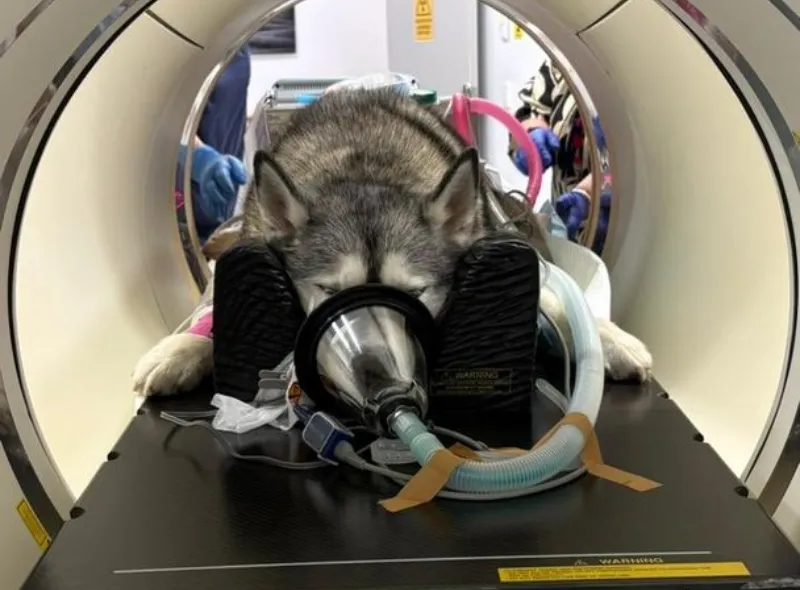
The patient underwent PET-CT imaging using the radiotracer F18-fluorodeoxyglucose (F18-FDG), administered intravenously at a dose of 200 MBq. After a 68-minute uptake period, PET acquisition was performed, followed by contrast-enhanced CT imaging.
Physiological tracer distribution was observed in expected regions, including the brain, salivary glands, abdominal organs, and urinary tract, providing confidence in scan quality and interpretation.
“By combining metabolic and anatomical insight in a single scan, PET-CT provides clarity and confidence for both veterinarians and pet owners navigating complex cancer cases.”
Key findings
The PET-CT scan identified a contrast-enhancing soft tissue mass within the mid to caudal aspect of the left nasal cavity, extending to the level of the cribriform plate. This lesion demonstrated marked FDG avidity (SUVmax ~10), consistent with metabolically active tissue and highly suggestive of recurrent or residual neoplasia.
There was also evidence of focal cribriform plate lysis with minimal extension into the ventral cranial vault, specifically the region of the left olfactory lobe. Importantly, this invasion was associated with minimal mass effect and no displacement of midline intracranial structures, indicating relatively localised progression.
Crucially, the adjacent brain parenchyma demonstrated FDG uptake comparable to the contralateral side, with no areas of reduced attenuation. This finding reduced the likelihood of significant radiation-induced necrosis, although MRI was suggested for further evaluation if clinically indicated.
From a staging perspective, there was no evidence of regional lymph node involvement, with mandibular and retropharyngeal lymph nodes appearing normal and only minimally avid. Additionally, the thoracic cavity was clear, with no pulmonary nodules or intrathoracic lymphadenopathy detected, effectively ruling out metastatic spread to the lungs.
Evaluation of the abdomen and musculoskeletal system did not reveal any clinically significant abnormalities. An incidental splenic nodule was identified, most consistent with benign extramedullary haematopoiesis.
“PET-CT revealed active tumour recurrence that conventional imaging had missed, enabling earlier and more targeted clinical decision-making.”
Assessment of cutaneous lesions
Of particular interest to the referring veterinarian and the pet owner were the newly identified subcutaneous nodules. PET-CT demonstrated a small cutaneous lesion along the left thoracic wall measuring approximately 6.3 mm, with very low FDG uptake (SUVmax 0.4). This level of metabolic activity is strongly suggestive of a benign process.
No additional metabolically active cutaneous or subcutaneous lesions were identified, providing reassurance that there was no evidence of disseminated cutaneous malignancy.
An additional focus of increased FDG uptake was noted in the left forepaw, between the second and third digits. In the absence of structural abnormalities on CT, this was considered most consistent with inflammatory change, such as pododermatitis, rather than neoplastic disease.
Clinical outcome and value of PET-CT
This case highlights the significant diagnostic value of PET-CT in the post-treatment assessment of oncology patients. While prior CT imaging suggested stability, PET-CT identified ongoing metabolic activity within the nasal lesion, supporting a diagnosis of recurrent or residual tumour.
Equally important was PET-CT’s ability to provide whole-body staging in a single examination, confidently excluding distant metastatic disease and characterising incidental findings. This level of diagnostic certainty is critical in guiding clinical decision-making.
For the referring veterinarian, the findings supported initiating adjuvant treatment with a targeted small-molecule inhibitor (Palladia) to manage the newly detected active disease. The findings also support further imaging analysis to closely monitor this site’s response to treatment, allowing for timely adjustment of the treatment approach as needed.
PET-CT imaging provided a comprehensive evaluation of tumour biology and anatomical extent in this patient. Combining metabolic and structural information, it enabled early detection of tumour recurrence, accurate staging, and differentiation between benign and pathological findings.
For veterinary professionals, PET-CT is a powerful tool in complex oncology cases, particularly when conventional imaging is inconclusive. For pet owners, it offers clarity and confidence, ensuring that clinical decisions are based on the most advanced and informative diagnostic data available.
We are currently accepting referrals. Pet owners can contact their vet directly and request a referral to PET Theranostics.

For Vets
Your Partner in Patient Outcomes
We exist to support veterinarians, enabling them to tailor treatment for optimal outcomes. With PET Theranostics, you gain a trusted partner in patient outcomes.
For Vets
For Pet Owners
Care, Compassion and Clarity
Our PET-CT scans give the clearest picture of your pet’s condition, helping your vet determine the best path forward.
For Pet OwnersFrequently Asked Questions
What is PET-CT, and how is it different from a standard CT scan?
PET-CT combines metabolic and anatomical imaging, allowing vets to see both the structure of tissues and their biological activity. This helps distinguish between scar tissue and active cancer. It provides a more complete picture than CT alone.
When should a vet consider referring a patient for PET-CT?
PET-CT is particularly useful when conventional imaging is inconclusive or when there is suspicion of recurrence or metastasis. It is also valuable for staging cancer and assessing treatment response. Referral is appropriate when a clearer diagnostic direction is needed.
Why was PET-CT recommended in this case?
Despite a stable CT scan, new clinical signs and nodules raised concern for recurrence or spread. PET-CT was used to assess metabolic activity and identify any hidden disease. This helped clarify whether the cancer had returned or progressed.
What does “FDG avidity” mean in simple terms?
FDG avidity refers to the amount of tracer a tissue absorbs, indicating its metabolic activity. Cancer cells often take up more tracer because they are more active. Higher uptake can suggest tumour presence.
Is PET-CT safe for pets?
Yes, PET-CT is considered safe when performed by trained professionals. The radiotracer used is short-lived and carefully dosed. Pets are monitored closely throughout the procedure.
What can PET-CT tell us about cancer spread?
PET-CT can assess the entire body in a single scan, helping detect whether cancer has spread to lymph nodes or other organs. In this case, it confirmed the absence of metastatic disease. This information is critical for treatment planning.
Can PET-CT differentiate between cancer and benign conditions?
Yes, PET-CT can help distinguish between malignant and benign lesions based on metabolic activity. Low uptake often suggests a benign process, as seen in the cutaneous nodules in this case. However, further testing may still be recommended if needed.
How does PET-CT help with treatment planning?
By identifying the exact location and activity of the disease, PET-CT allows for more targeted treatment decisions. It can support choices such as surgery, radiation, or further diagnostics. It also helps determine if aggressive local treatment is appropriate.
What role does PET-CT play after cancer treatment?
PET-CT is valuable for detecting recurrence earlier than structural imaging alone. It can identify active tumour tissue even when CT appears stable. This allows for earlier intervention if needed.
Do pet owners need a referral for PET-CT?
Yes, PET-CT services are typically accessed via veterinary referral. Pet owners can speak with their vet about whether it is appropriate for their pet. The vet can then arrange a referral to PET Theranostics.
What should pet owners expect during a PET-CT appointment?
Pets will undergo imaging under controlled conditions, including tracer injection and a waiting period before scanning. The procedure is carefully managed to ensure comfort and safety. Results are then interpreted by specialists and shared with the referring vet.
Why is PET-CT considered valuable in complex oncology cases?
PET-CT provides both functional and structural insights in a single scan. This improves diagnostic accuracy and confidence for both vets and pet owners. It supports more informed and precise clinical decisions.

Google Rating
5

“To me, Dr. Lurie is Godsent. He is always available to talk. Dr. Lurie gave us all the time on a call on Saturday morning. He didn’t rush us off the phone; he was patient with all our questions. He answered and gave us more information regarding the treatment than what we had even asked for. I don’t know what good I have done in this lifetime to meet such people. Lucky me! Lucky Sambuca! Sensational. Fantastic. Kind. Fabulous. Gentle. Understanding. Relatable”.
Sabeena & David
Google Rating
5
“From the outset, David explained Toby’s diagnosis and the treatment options not only in simple, understandable terms but, most of all, with incredible empathy. David’s honest and patient approach made our decision to undertake radiotherapy treatment so comfortable. David kept us updated on his progress and continued to reassure us. Over two years on, our little fella is still going strong and is heading towards his 18th birthday – every day is a blessing”
Brian & Sharon Porter
Google Rating
5
“Amazing experience and team. The PET scan gave us clear answers about my boy’s nasal cancer in a much less invasive way, helping guide his treatment and easing concerns about further spread. He had no side effects and was his happy self afterwards. The team made us feel supported every step of the way. It also confirmed the diagnosis when a biopsy wasn’t possible. Truly grateful to Vivian and the team, highly recommend to other pet parents.”
Simonne Martin
Google Rating
5
“What an amazing place with amazing people. Everything was explained to me in a very compassionate but also matter of fact way which was perfect. Sam was treated with such care and compassion and it’s obvious that everyone really cares.”
Bart Van KootenContact Us
Vets
To refer a patient or book a consultation, please call us directly on
02 7238 4190 or use the referral form.
Pet Owners
We are a referral-only clinic. Please speak with your Vet about PET Theranostics.
If you have a general enquiry or seek additional clarification about PET-CT/CT scan email us or call our office during normal opening hours.


375A Concord Road, Concord West NSW 2138

Monday-Friday: 8 am-6 pm
Saturday/Sunday – Closed

© 2026 PET Theranostics. All rights reserved. Website by Specialist Vet Marketing